
WELCOME, ACCREDITORS
We extend our warmest welcome and sincere appreciation for visiting the virtual room of the College of Engineering and Architecture. As you explore this site, we hope you gain a meaningful and enriching experience while navigating through its various sections and resources. May this platform provide you with valuable insights into the college’s academic excellence, institutional achievements, and commitment to quality education.
 BSCE Level IV Accreditation Link
 CSU Official Website
 COEA Official Facebook Page
Institutional Video
Campus Tour Video
College History
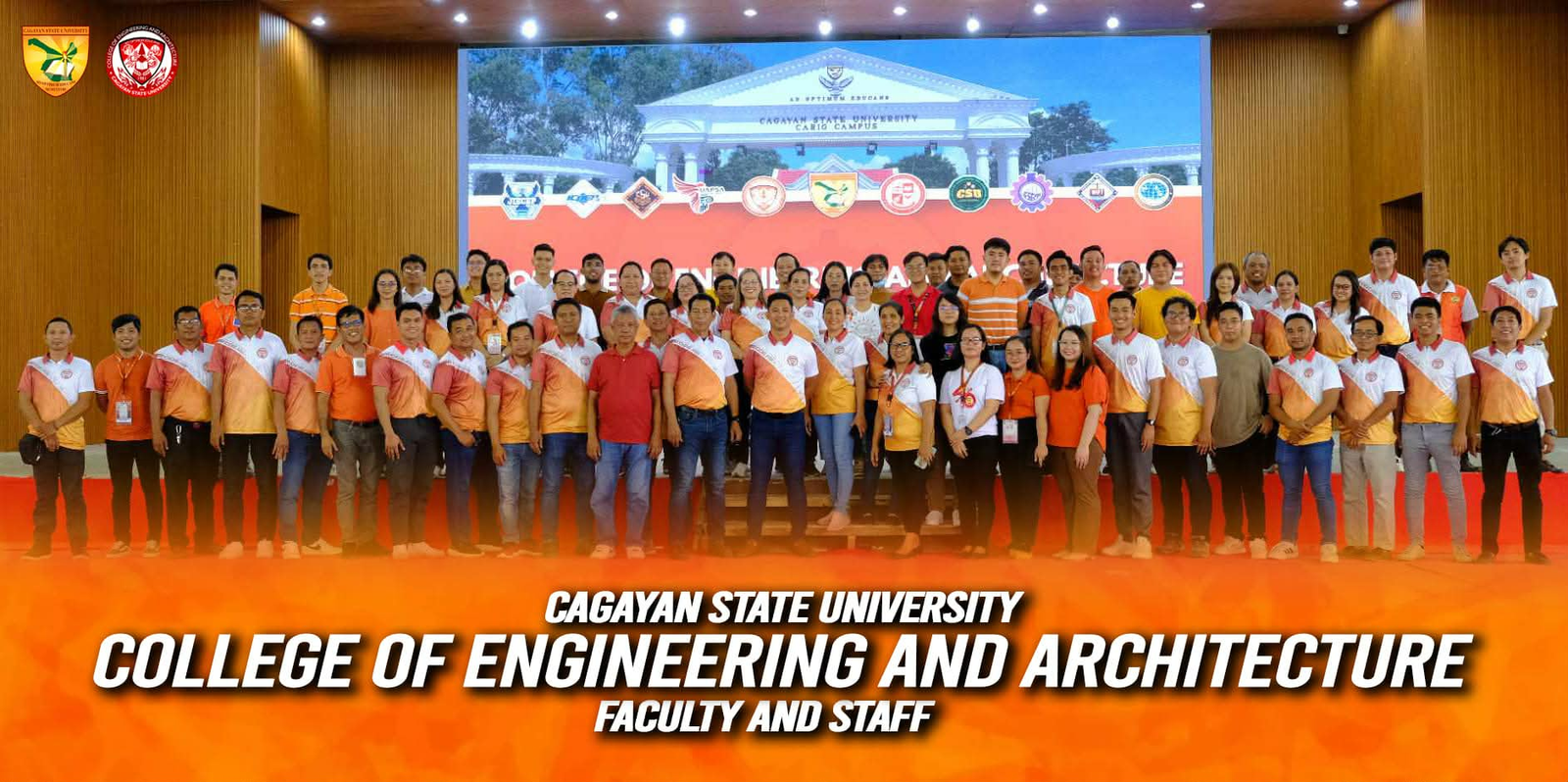
The College of Engineering of the Cagayan State University was conceived in 1981 pursuant to the national development goal of providing the manpower requirements of the country, particularly Region 02, in rural development through Science and Technology. It provides avenues to quality Engineering education to all students who have the propensity to Mathematics and Science regardless of race, sex, socio-economic status, religion and political affiliation or ideology. In 1981, with Dr. Manuel T. Corpuz as the University President and under the pioneer Dean, Engr. Jose Borja, Bachelor of Science in Civil Engineering was the lone course offering. In 1988, six years later, under Dean Dominador T. Agatep, Bachelor of Science in Electrical Engineering and Bachelor of Science in Agricultural Engineering were offered. The offering of the latter in Tuguegarao Campus closed the same program in Lallo Campus and Piat Campus. In 1990, two years later, Bachelor of Science in Electronics and Communications Engineering and Bachelor of Science in Computer Engineering. Then in 1997, under Dean Diosdado Dimalanta, Bachelor of Science in Chemical Engineering followed suit. In 2019, Bachelor of Science in Architecture was offered. Lastly, in 2022, Bachelor of Science in Geodetic Engineering was added to the roster of programs being offered by the College. The gradual expansion of course offering has made the University more responsive to regional development.
Program History
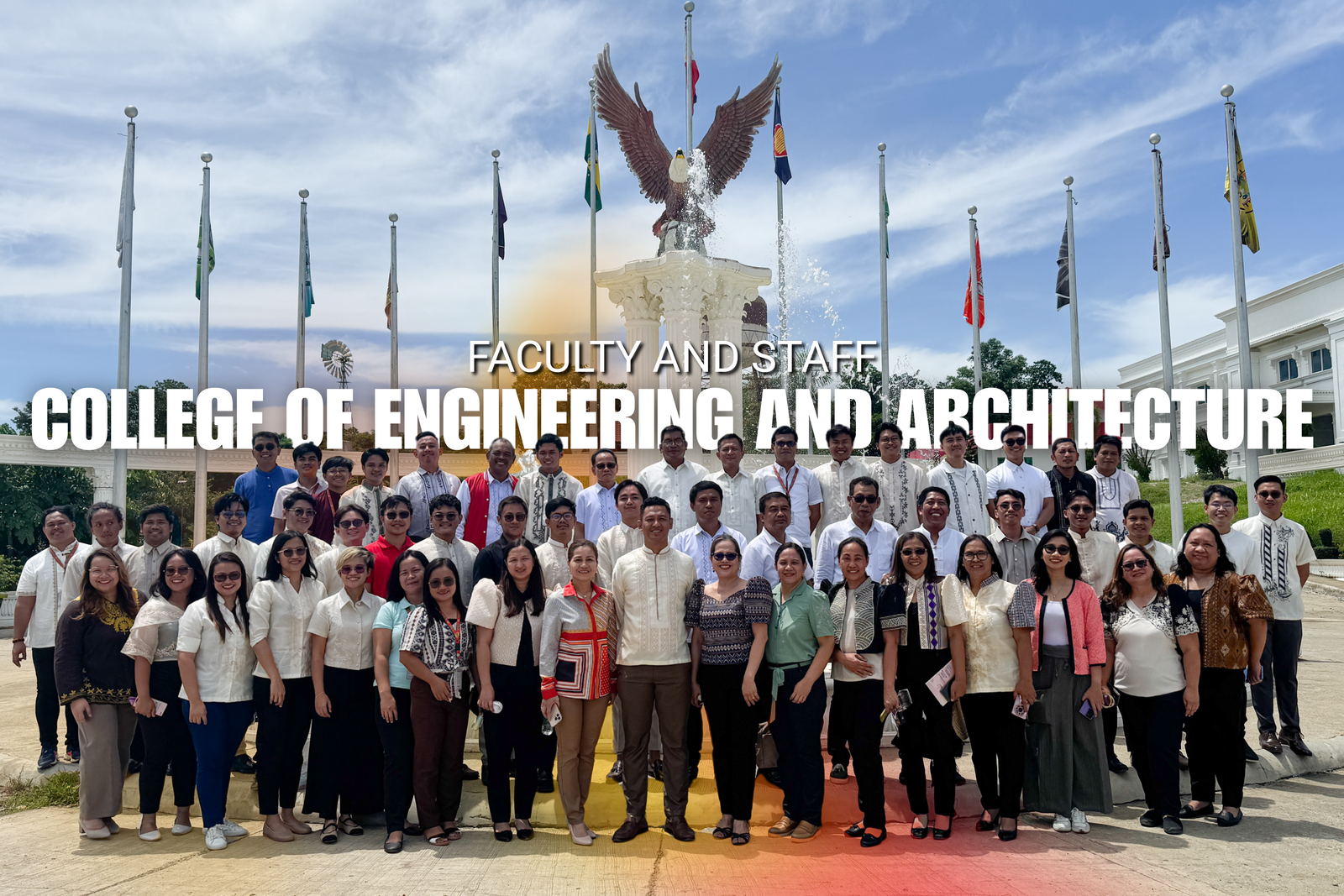
The program was opened in response to the labor demand of the region for infrastructure development, an essential factor to spur regional socio-economic growth and development. Competent instructors and professors with graduate degrees, local and abroad, staff this program. The department produces quality graduates and manifested by its performance in the Civil Engineering Licensure Examination, which is consistently higher than the national percentage of passing. With its performance, the department was adjudge as No. 5 among the top civil engineering schools in the Philippines which are offering the program for a minimum of ten years. The department also received commendations and admirations for producing licensure examinations topnotchers and also became a Center of Development. The program is granted with Certificate of Program Compliance (COPC 053 s2015) by the Commission on Higher Education in accordance with pertinent provisions of RA 7722, otherwise known as the “Higher Education Act of 1994” and CHED Memorandum Order No.028 s2007, Policies, Standards and Guidelines for Civil Engineering program. The curriculum is designed to meet or even exceeded the CHED minimum requirements and the recent development and technologies in the field of civil engineering, locally and globally. It is continuously updated to guarantee a certain breadth of knowledge of Civil Engineering fields through a set of core courses. It ensured depth and focus in certain disciplines through areas of specialization. It provides recommended tracks of specialization. The curriculum develops the basic engineering tools to solve complex problems in the field of Civil Engineering. This enables the graduates to achieve success in a wide range of career. Electives are also prescribed to give a certain degree of specialization so that institutions of learning will develop strengths in areas where they already acquired a certain degree of expertise. Other than instruction as its major thrust, the college engages in research and extension activities in aid of community activities. The college go beyond putting instruction as a benchmark to the needs of the students and the community – research as a thematic instrument and community extension as the application tool. It engages in various accreditation institutions to oversee the progress and convalescence of its very nature as a learning avenue. Today, the College continues to strengthen its thrust to further contend in the millennium trends.